
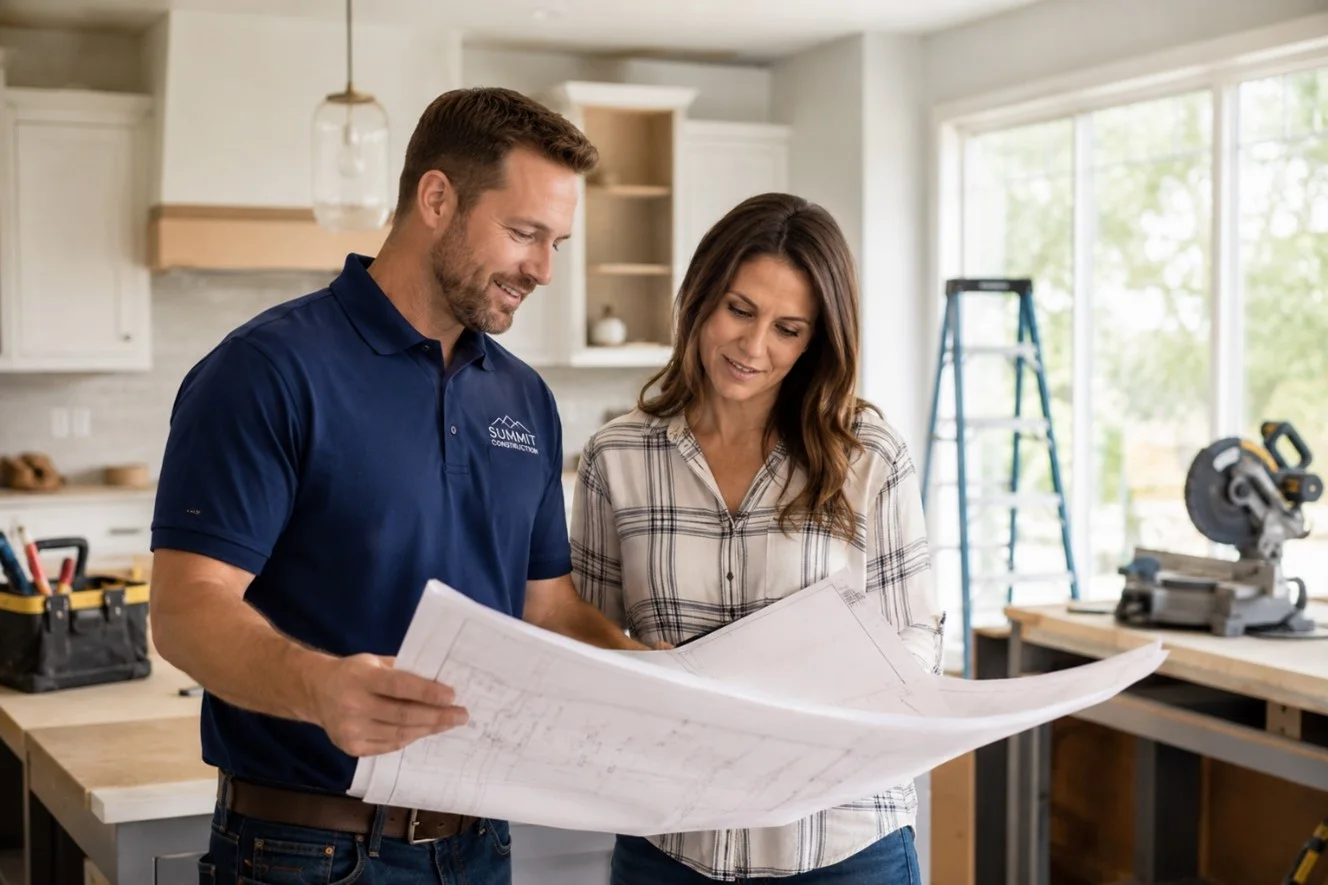
The best home improvement contractors are licensed, insured, and transparent about timelines and costs. Before hiring, verify credentials, check references, and get at least two written estimates. A qualified contractor will pull permits, communicate clearly, and back their work in writing. Finding reliable home improvement contractors is one of the most important decisions you’ll make as a homeowner. The wrong hire can mean blown budgets, missed deadlines, and repairs that don’t pass inspection. The right contractor, though, turns your vision into a finished project you’ll enjoy for years. This guide walks you through exactly what to look for, which questions to ask, and how to protect yourself every step of the way.
The home remodeling industry is bigger than ever. Americans are expected to spend over $600 billion on residential remodeling in 2025, according to Harvard’s Joint Center for Housing Studies. With that much money changing hands, it pays to know how the hiring process actually works before you sign anything.
What Do Home Improvement Contractors Actually Do?
A licensed general contractor manages your entire project from start to finish. They coordinate subcontractors, pull permits, order materials, and make sure the work meets local building codes. Think of them as the project manager for your home.
There are two main types you’ll encounter. A general contractor (GC) handles broad projects like whole-home renovations, home additions, or basement finishing. A specialty contractor focuses on one trade, like electrical, plumbing, or tile. For large jobs, you want a GC who can coordinate the specialists.
Here is a quick breakdown of when each type fits:
| Project Type | Best Contractor Type | Permits Typically Needed? |
| Kitchen remodel | General contractor | Yes |
| Bathroom remodel | General or specialty | Usually yes |
| Home addition | General contractor | Yes |
| Basement finishing | General contractor | Yes |
| Paint, minor repairs | Handyman | Rarely |
How Do Home Improvement Contractors Handle Licensing and Insurance?
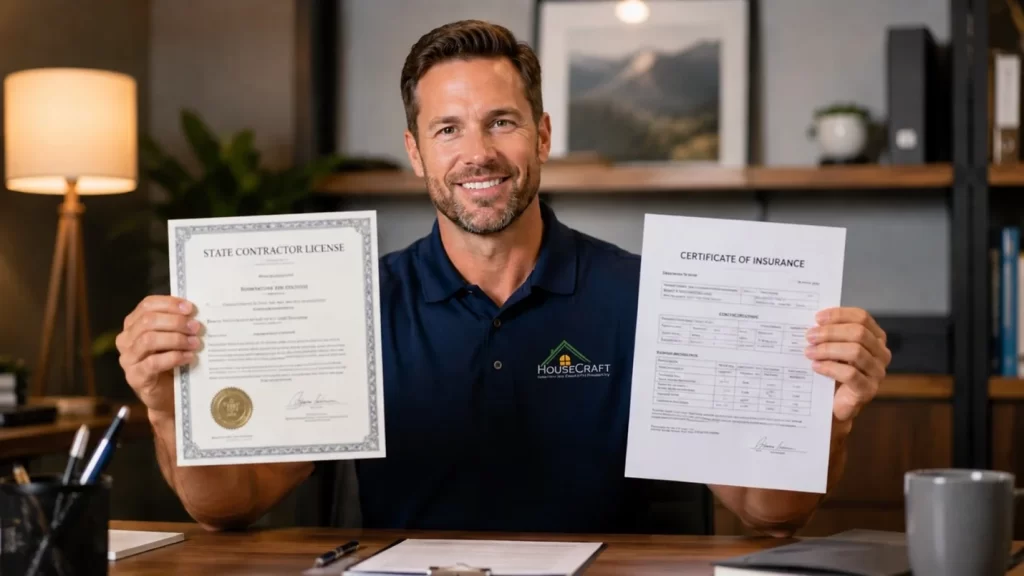
Every legitimate residential contractor should carry two things without exception: a current trade license and general liability insurance. Licensing requirements vary by state, but most require contractors to pass exams, complete a minimum number of hours in the field, and renew credentials regularly.
Why does this matter to you? If a contractor skip permits or their work fails a code inspection, you as the homeowner are responsible for getting it fixed. That can mean tearing out finished walls, paying for re-inspections, or losing money when you try to sell the home.
Ask for proof of both documents before any work begins. A reputable contractor will hand these over without hesitation. Red flags include vague answers about licensure, requests for large cash payments upfront, or pressure to start quickly before you’ve reviewed a contract.
What Projects Give You the Best Return on Investment?
Not all home improvements are equal when it comes to resale value. If you’re thinking about a kitchen remodel near me or a master bathroom remodel, you’re on the right track. The National Association of Realtors’ 2025 Remodeling Impact Report found that kitchen and bathroom upgrades consistently top the list for cost recovery at resale.
Projects like home additions and basement remodeling add functional square footage, which directly impacts appraised value. A finished basement, for example, can add usable living space without the cost of building upward.
Here are projects worth prioritizing, roughly ordered by value added:
- Kitchen remodel: Updated cabinets, countertops, and appliances increase daily function and buyer appeal.
- Bathroom remodel near me: Fixtures, tile, and vanity upgrades modernize one of the most-scrutinized spaces in any home.
- Room addition or house addition: Adding a bedroom or family room expands livable square footage.
- Basement renovation: Converts unused space into an office, gym, or guest suite.
- Custom kitchen design: High-end finishes with smart layouts serve both family use and resale appeal.
That said, major structural repairs (roof, plumbing, foundation) should come before aesthetic upgrades. Ignoring those in favor of cosmetic improvements is a common and expensive mistake.
How Do You Find Reliable Remodeling Companies Near Me?
The search for trusted remodeling companies near me starts with referrals. Ask neighbors, friends, or your real estate agent who they’ve used and would use again. Personal referrals carry more weight than online reviews because the person recommending has real skin in the game.
Once you have a short list, do this before calling anyone:
- Check their state contractor license number on your state’s licensing board website.
- Verify general liability and workers’ comp insurance.
- Look up their business address (not just a PO box).
- Read reviews on Google and check for any complaints with the Better Business Bureau.
When reaching out to home addition contractors or general contractors for larger jobs, request at least two written proposals. Proposals should spell out scope of work, materials, payment schedule, and estimated timeline. A vague proposal is a warning sign.
What Should You Expect During a Basement Finishing or Basement Renovation Project?
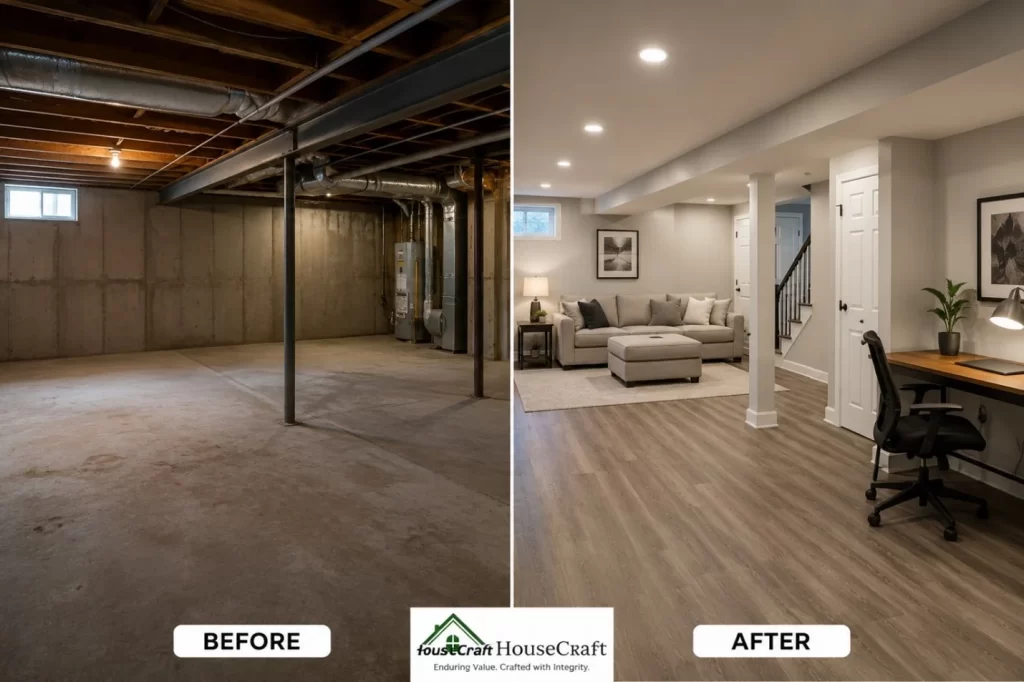
A basement finishing project is one of the more involved home improvements you can take on. It typically requires framing, insulation, drywall, electrical rough-in, and often plumbing if you’re adding a bathroom. Plan for permit inspections at multiple stages.
For basement remodel ideas that maximize the space, consider an open-plan layout with a designated home office area, a guest suite with egress window, or a finished utility room that doubles as storage. Your contractor should walk you through code requirements for ceiling height, egress, and fire safety before design gets finalized.
How Does a General Contractor Near Me Manage Subcontractors?

A strong general contractor near me maintains an established network of licensed subcontractors for electrical, plumbing, HVAC, and other trades. They should be able to name the subs they use regularly and explain how they vet them.
Ask who will be on-site day to day and how communication will flow. Some GCs are hands-on and present every day. Others work through a site superintendent. Either can work well, as long as you know who your point of contact is and how quickly they respond when issues come up.
Get change order procedures in writing before work starts. Any change to the original scope should be documented, priced, and signed off by both parties before the work happens. Verbal agreements during renovation are a reliable way to end up in a dispute.
Frequently Asked Questions
Should I hire a general contractor or manage subcontractors myself?
For projects involving multiple trades (like a kitchen remodel or room addition), a general contractor saves you significant time and coordination headaches. Self-managing subcontractors works for simple single-trade projects but becomes risky fast when scheduling, permits, and inspections are involved.
What certifications should I look for in a home improvement contractor?
Look for industry credentials like CGR (Certified Graduate Remodeler) through NAHB, NARI membership (National Association of the Remodeling Industry), or LEED certification for sustainable builds. State licensing is the baseline requirement. Certifications above that signal a contractor who invests in their trade knowledge.
What is the difference between a residential contractor and a commercial contractor?
A residential contractor specializes in single-family homes and small multi-family buildings. They understand residential zoning, home-specific building codes, and how to work in occupied spaces. Commercial contractors build for offices, retail, and industrial uses, which involves different codes, timelines, and project management structures.
How do I know if my contractor is actually licensed?
Every state maintains a public database of licensed contractors. In Massachusetts, you can verify through the Office of Consumer Affairs and Business Regulation. Search by name or license number. If a contractor’s license doesn’t appear or shows a lapse, that’s a hard stop before any agreement is signed.
Conclusion
Hiring the right home improvement contractors comes down to doing your homework before you hand over any money. Verify licenses, get written proposals, understand the permit process, and know who is on-site every day. The contractors who make this process easy and transparent are usually the ones who deliver quality work.
Whether you’re planning a kitchen renovation, a master bathroom remodel, a room addition, or a full basement finishing project, the principles are the same. Ask the right questions, compare proposals carefully, and choose the team that communicates clearly and shows up when they say they will.
Ready to start your next project? Request a free estimate from HouseCraft and connect with a licensed general contractor serving Greater Boston.